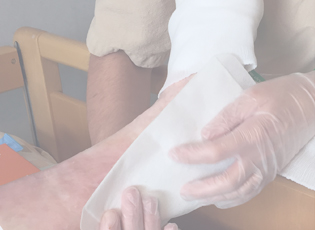
For someone living with a hard-to-heal wound, an unpleasant odour can be more than an inconvenience: it may affect their confidence, relationships and willingness to spend time with others.1 Healthcare professionals are familiar with wound odour, but its impact on the person behind the wound is not always as obvious.
Reviewed by: Jade Roberts, Clinical Development Manager, CD Medical, Tissue Viability Nurse Specialist.

A recent pilot evaluation involving 27 patients explored a combined approach to managing wound odour and exudate. Its findings provide useful insight into a common challenge in everyday wound care.2
Imagine worrying that someone might notice the smell coming from your body. You may avoid sitting too close to others or feel uncomfortable inviting anyone into your home. For patients living with malodorous wounds, these concerns can become part of daily life. Research has linked wound odour to embarrassment, social isolation, and reduced quality of life.3

For clinicians, odour can also be an important part of wound assessment. It may be associated with bacteria, dead tissue or infection, but odour alone does not establish the cause.4
When wounds produce large amounts of exudate (wound fluid), you may need to manage moisture and odour at the same time.
This article presents clinical findings from a prospective pilot evaluation at a specialist wound care clinic in the USA. The evaluation examined a combined approach to managing wound odour and exudate in patients with hard-to-heal wounds.5
The evaluation included 27 patients with chronic wounds that produced high levels of exudate and an unpleasant odour. The wounds included venous leg ulcers, pressure ulcers, and diabetic foot ulcers.
Patients were treated with two dressings used together: a superabsorbent polymer dressing (DryMax Super) as the primary dressing to manage exudate and a secondary cinnamon-based odour-control dressing (Cinesteam) to help manage wound odour.
Clinicians evaluated exudate levels and odour intensity at baseline and again after seven days.
Of the 27 patients enrolled, 26 completed the seven-day assessment.
The results demonstrated improvements in managing exudate and controlling odour:
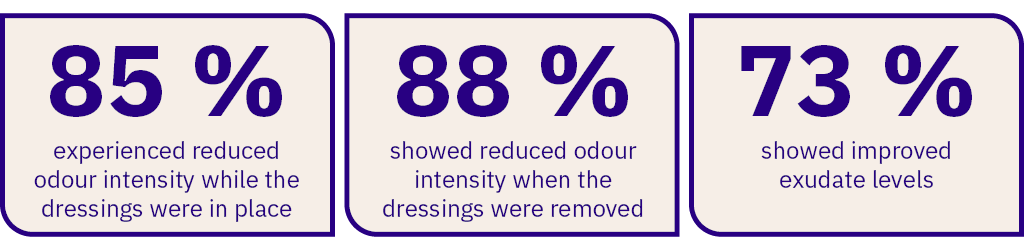
Clinicians also rated the dressing combination positively for ease of use, application, removal, and conformability (how well it fits the shape of the wound or body).
Every participating clinician said they would recommend using the combination in routine practice.
These findings from a small pilot evaluation offer encouraging early insights into managing wound odour and exudate together in everyday clinical practice.
Wound odour may result from several causes, including bacterial activity and tissue breakdown.6
Consider odour alongside other wound observations, not as an isolated problem. Odour changes can help you assess the wound and decide whether further investigation is needed.7
The smell is something to notice, not a diagnosis in itself.
For heavily exuding wounds, maintaining moisture balance is essential.8
The pilot evaluation explored combining a superabsorbent dressing with an odour-control dressing to address both challenges.
This is a practical consideration: when a wound produces a large amount of fluid and has an unpleasant odour, addressing only one issue may not reflect the patient’s full experience.
Living with wound odour can be sensitive. Research shows that some patients feel embarrassed or socially isolated, while others gradually accept the smell as part of everyday life.9
That makes asking about the patient’s experience an essential part of wound assessment.

Is the patient worried that others will notice? Has the smell affected their sleep, confidence, or social activities?
Simple questions about everyday life can help clinicians better understand a patient’s concerns and priorities.
Sometimes the most useful question is simply: “How is this affecting you?”
Managing wound odour is about more than masking an unpleasant smell. It also involves recognising how wound-related symptoms affect the person living with the wound.10
The pilot evaluation provides encouraging early insights into managing odour and exudate together. More importantly, it highlights the need to consider both issues when assessing wounds with heavy exudate and malodour.
Good wound care goes beyond what we can see—or smell.
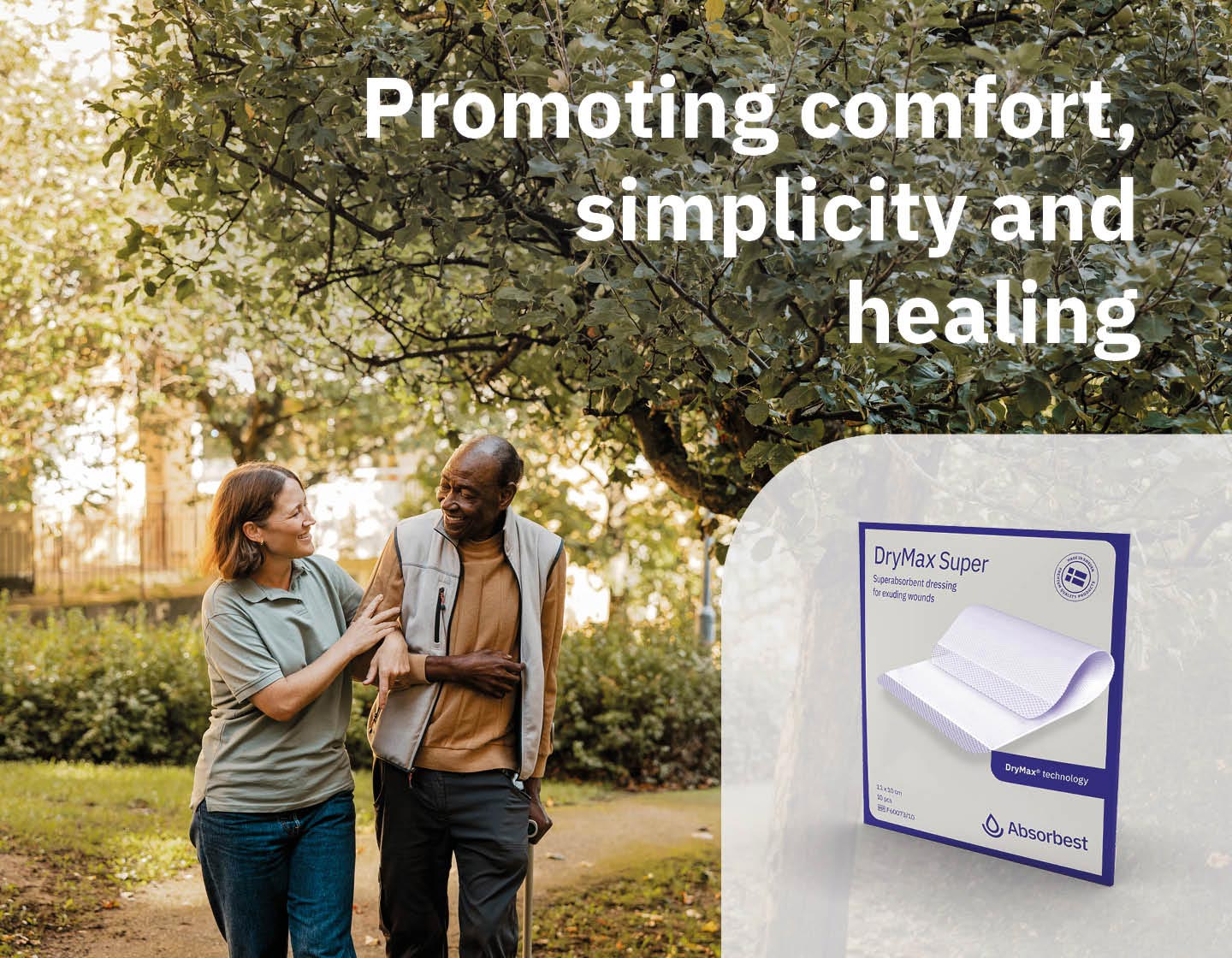
Experience the difference and compare the outcome with our superabsorbent primary dressing. Designed for comfort and to support a simple wound-healing process, it creates an optimal healing environment to help clinicians deliver quality care.

1 Gethin G, Murphy L, Sezgin D, Carr PJ, McIntosh C, Probst S. Resigning oneself to a life of wound-related odour – A thematic analysis of patient experiences. Journal of Tissue Viability. 2023;32(4):460–464.
2 Leininger K, Avsec T, Lind S, et al. Dual Exudate and Odor Management with a Superabsorbent Polymer Dressing Combined with a Cinnamon Odor-Control Dressing in Chronic Malodorous Wounds: A Prospective Pilot Evaluation. Clinical poster. Absorbest AB/CEMAG Care.
3 Una Adderley, Tissue Viability Prescribing Specialist. Wound Exudate: What it is and how to manageme it, Wounds-UK.
4 Ousey K, Roberts D, Gefen A. Early identification of wound infection: understanding wound odour. Journal of Wound Care. 2017;26(10):577–582.
5 Leininger K, Avsec T, Lind S, et al. Dual Exudate and Odor Management with a Superabsorbent Polymer Dressing Combined with a Cinnamon Odor-Control Dressing in Chronic Malodorous Wounds: A Prospective Pilot Evaluation. Clinical poster. Absorbest AB/CEMAG Care.
6 Ousey K, Roberts D, Gefen A. Early identification of wound infection: understanding wound odour. Journal of Wound Care. 2017;26(10):577–582.
7 Ousey K, Roberts D, Gefen A. Early identification of wound infection: understanding wound odour. Journal of Wound Care. 2017;26(10):577–582.
8 Una Adderley, Tissue Viability Prescribing Specialist. Wound Exudate: What it is and how to manageme it, Wounds-UK.
9 Gethin G, Murphy L, Sezgin D, Carr PJ, McIntosh C, Probst S. Resigning oneself to a life of wound-related odour – A thematic analysis of patient experiences. Journal of Tissue Viability. 2023;32(4):460–464.
10 Gethin G, Murphy L, Sezgin D, Carr PJ, McIntosh C, Probst S. Resigning oneself to a life of wound-related odour – A thematic analysis of patient experiences. Journal of Tissue Viability. 2023;32(4):460–464.


+46 (0)494 77 99 50
info@absorbest.se
Klintvägen 1, 590 39 Kisa

Contact us
+46 (0)494 77 99 50
info@absorbest.se
Klintvägen 1, 590 39 Kisa